
Introduction to Marine Biology
How to Identify Coral
Start with growth form
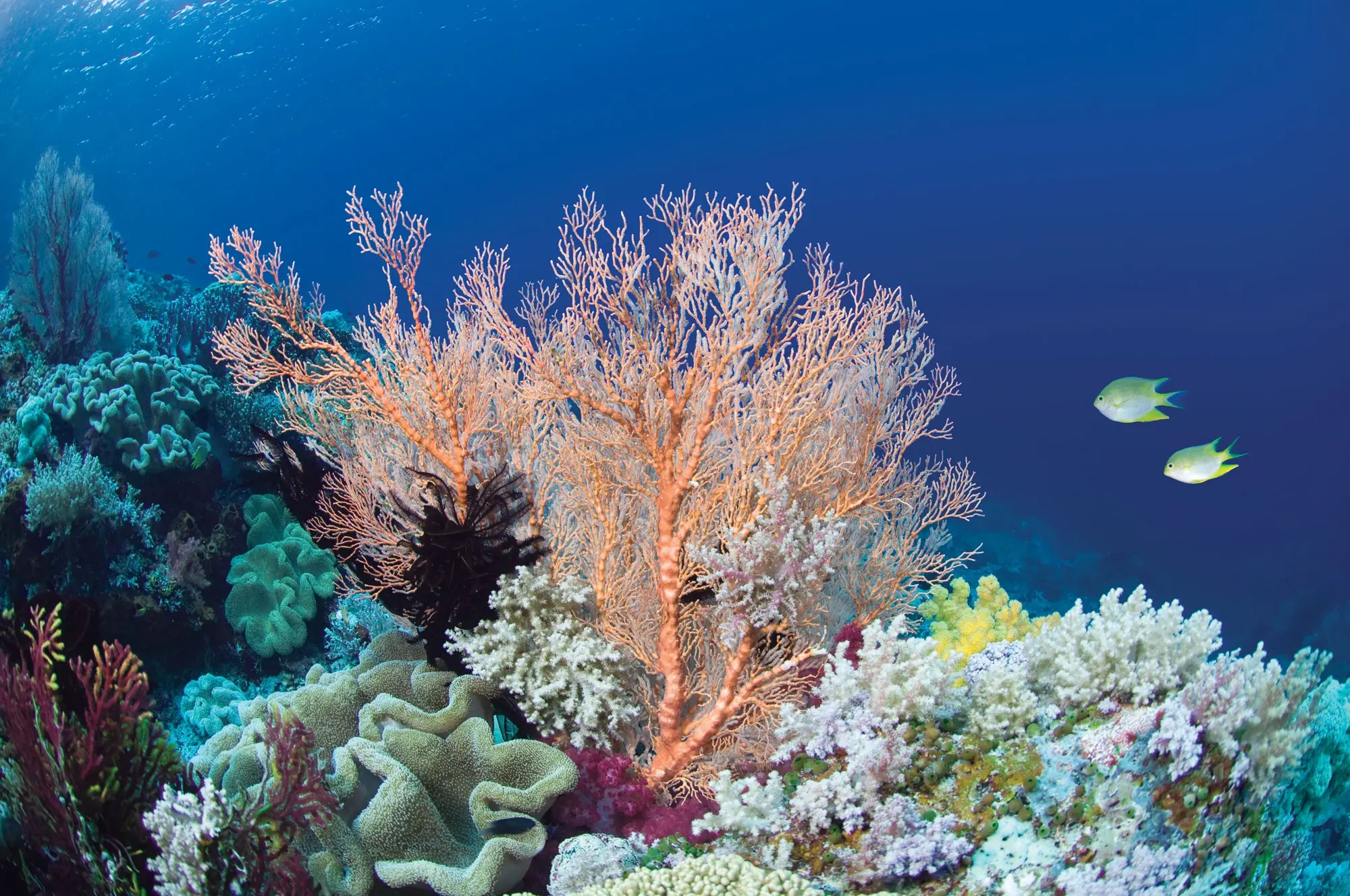
Branching, massive (boulder-shaped), plating, and encrusting types respond differently to waves and light. Sketching the outline before naming a species helps you avoid mixing up look-alikes.
Use polyp clues
Day vs. night feeders often show different textures: some keep tentacles tucked until dark; others show fuzzy crowns in sunlight. Note mouth size, spacing, and whether polyps share walls.
Color is a hint, not proof
Bleaching and algae film change apparent color fast. Pair what you see with structure—ridge spacing, corallite shape, and tip taper—before relying on hue alone.
- Photograph with a scale object when permitted.
- Record depth and light direction for context.
- Cross-check with Coral Anatomy terms from the companion reading.
This page is placeholder course content for navigation demos.